Skip to main content


Where Low Back Pain Is Typically Felt
Common Causes & Aggravating Factors
Low back pain can feel like an ache, stiffness, tightness or a general sense of tension across the lower back and hips. For many people, there isn’t one obvious injury. Instead, symptoms gradually develop, come and go over months or years, and may eventually become more persistent.
At other times, back pain can flare suddenly and become surprisingly intense. This can happen during an everyday movement such as bending to pick something up, coughing, gardening, housework or exercising at the gym.
The severity of the pain doesn’t always tell you how serious the underlying problem is. Even relatively simple movements can sometimes trigger a very painful episode.
Where Low Back Pain Is Typically Felt
Low back pain isn’t always felt directly over the spine. It may be experienced across the lower back, beside the spine, around the top of the pelvis, or into the buttock and hip region.
Muscles, fascia and spinal joints all contribute to movement and load through this area. For some people, several structures may be contributing to their symptoms rather than there being one isolated painful muscle or joint.
Do any of the pain patterns below look familiar?
Common Causes & Aggravating Factors
Low back pain often changes depending on movement, activity and how long you remain in one position.
You might notice stiffness when you first get out of bed that improves after a hot shower and moving around. Sitting at a desk or driving for long periods can also leave the lower back and hips feeling stiff or uncomfortable, with symptoms improving once you stand up and change position.
Flare-ups may also follow activities your body isn’t accustomed to—for example, extra walking while travelling, gardening, moving house or returning to exercise after a break.
Rather than there being one universally “bad” posture, symptoms may be influenced by how long you remain in one position, how much activity your body is accustomed to and how you respond to different movements and loads.
Key Muscles & Fascia Associated With Low Back Pain
The lower back doesn’t work in isolation. A network of muscles and connective tissue surrounds the lumbar spine and pelvis, helping produce movement, transfer load and control the spine.
These are some of the structures I commonly assess and treat when they’re relevant to a patient’s presentation:

Quadratus Lumborum
A deep muscle connecting the pelvis, lumbar spine and 12th rib that contributes to movement and control of the trunk.
Psoas Major
A deep muscle connecting the lumbar region to the femur, linking movement of the trunk, pelvis and hip.
Erector Spinae
Large columns of muscle running alongside the spine that contribute to movement and control of the trunk.
Multifidus
Small, deep muscles positioned close to the vertebrae that contribute to movement and control of individual spinal segments.
Thoracolumbar Fascia
A substantial layer of connective tissue across the lower back that interacts with muscles of the trunk, spine and pelvis.
Gluteus Medius
A broad muscle on the side of the hip that helps control the pelvis and hip during standing, walking and running.
Why I Treat More Than Just the Spine
Low back pain can involve muscles, fascia and spinal joints in different proportions.
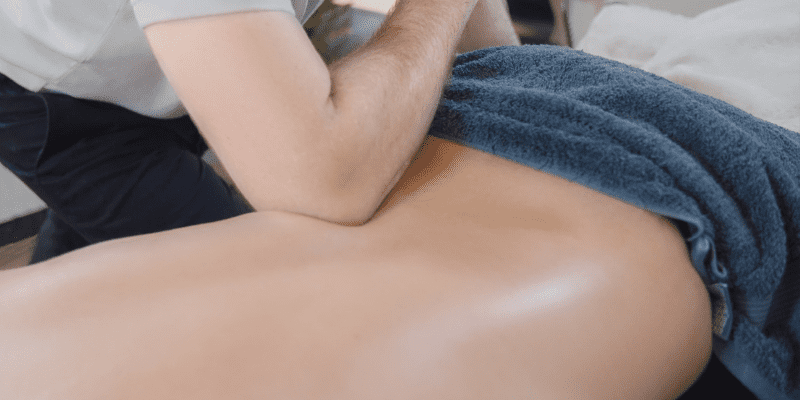
That’s why my treatment isn’t limited to a quick adjustment. When muscle and fascial tenderness or tension appear relevant, I dedicate time to hands-on treatment using techniques such as remedial massage, myofascial release and fascial manipulation, before incorporating chiropractic adjustments where appropriate.
The aim is a more comprehensive muscle + spine approach in one 30–45-minute appointment, rather than assuming every person’s back pain requires exactly the same treatment.
Success Stories
These are just some of the reviews from patients treated at Sydney Chiropractic & Massage and my previous Waterloo location.
My approach is straightforward: no routine X-rays, no scare tactics and no upfront corrective-care plans. Instead, treatment is tailored to the individual and may combine dedicated hands-on muscle treatment with chiropractic care.
Looking for a comprehensive approach to low back and hip pain?